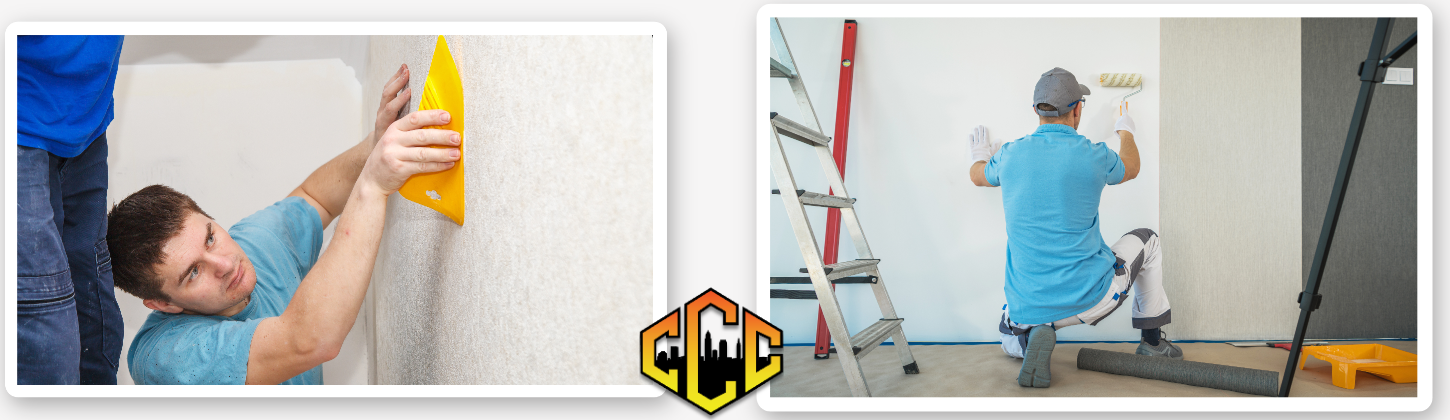
Wallpaper Installation Project in Westlake and Cleveland
Choosing a Wallpaper Contractor is Easy. Choosing the Wallpaper is Hard.
When you choose Cleveland Custom Coatings as your wallpaper contractor we make choosing a wallpaper a bit easier by giving you our experience and expertise to draw on. In our post Wallpaper is Making a Comeback you'll find 5 technical characteristics to consider when selecting a wallpaper. In this post we give you more conceptual ideas to think about.
Which Wallpaper Should I Use in My Home?
The type of wall paper used will depend on what room you are using it in. When a wallpaper contractor consults with you about which wallpaper to choose they would ask about the room’s size, the room’s purpose, the conditions of your walls and the lighting.
Wallpaper for a Room: Size, Purpose, Wall Condition & Lighting
Let’s first talk about the size of your room. If you love a bold look and want to use a big pattern, keep in mind that some large patterns can overwhelm small spaces. Best to save that style for larger rooms and stick to something more subtle in pattern for your smaller rooms. And if you still want to go bold, do it with color instead of pattern.
Next, let’s discuss the purpose of your room. If you are considering wallpapering a bathroom or powder room, you will be looking for a wallpaper that can deal with moisture. In these damp spaces you will need to go in the direction of vinyl wallpaper. The moisture resistant nature of this product will ensure longevity and prevent you from having to redo your decorating project.
What if you have walls that are imperfect? In this case it is best to avoid thin wallpapers and go with a thicker more forgiving material like a non-woven or expanded wallpaper. Your walls will look like new and those problem areas will disappear.
How can wallpaper effect the lighting of a room? Depending on the sun exposure of your room, there are different techniques you can use to your advantage to increase the ambiance of your space. Let’s say you have a room with northern exposure, most likely this room is dark. You can enhance the mood of this room by choosing warmer colors to make the space feel more inviting. If you have a southern exposure, be sure to choose a wallpaper that is light resistant to avoid washed out colors over time.
Wallpaper Contractor Explains Types of Wallpaper
There are a lot of types of wallpaper out there. But which one is right for you? The wallpaper contractors of Cleveland Custom Coatings can help answer your questions.
1. Traditional wallpaper is made of, well… paper. This paper needs to be pre-glued prior to application and the higher the weight per square meter, the higher quality of paper it will be.
2. Non-woven wallpaper is made from polyester and cellulose covered with a vinyl film. This type is thicker than your traditional wallpaper and so it can be applied to surfaces that may be considered damaged. Unlike traditional wallpaper, the glue is applied to the wall prior to hanging it.
3. Vinyl wallpaper contains a thin layer of PVC making it completely waterproof! Suitable for all rooms in the house, but ideal of bathrooms, this product offers good light resistance as well. However, due to the gloss of the paper, Vinyl may accentuate any imperfections on your wall. If your walls have irregularities, you may be better off going with a non-woven wallpaper.
4. Expanded vinyl wallpaper is vinyl wallpaper that has been embossed. Using raised ink to create a relief pattern not only creates visual interest but will also help hide any wall imperfections.
5. Flocked velvet wallpaper also uses a relief pattern. But instead of raised paint, the pattern is made on the material with glue and then synthetic fibers are applied on top, otherwise know as flocking.
6. Japanese straw wallpaper is made by intertwining materials like bamboo, raffia, and straw. Since this wallpaper is often made by hand it is important to get all of your materials from the same lot to avoid hue variations in the color.
7. Metallic wallpaper is mostly used in contemporary design. A metal layer is welded to a paper support creating shiny appearance. Whether it is plain or patterned, this wall covering plays with the light and is considered easy to clean using a damp sponge. Be aware that because of the glossy nature of the metallic paper, wall imperfections will show though.

Wallpaper Installation Contractors for Your Residential Wall Coverings Project
We take your painting and wall covering project ideas, consult with you on products - wallpaper, wall paint, trim paint, ceiling paint, cabinet paint and other coatings, add our finishing touches and deliver on your residential or commercial project. Our professional contractors provide the attention to detail needed in every phase of our painting or wallpapering project - from the details needed to quote and estimate a project correctly to the expertise to deliver each project on time and on budget.
HOUSE PAINTING SERVICES
Cleveland Custom Coatings takes the time to consult with each home owner and residential painting customer to choose the best coating for their painting transformation. They type of paint, wallpaper or other coating you choose for your walls, cabinets, shelves, paneling, trim doors and other surfaces of your home is a decision that should be made with several things in mind. Let us help you choose the best paint or coating for your residential painting job.
CLEVELAND CUSTOM COATINGS
When you choose Cleveland Custom Coatings for your painting project, you get a partner that cares about your goal, your vision, your budget, your timeline and above all - your satisfaction with the painting or custom coatings project.
How Do I Clean Wallpapered Walls?
One of the biggest benefits of wallpaper is how much easier it can be to clean then paint, making your walls look clean longer without the need for re-painting every few years to cover up scratches. There are several methods to clean wallpaper, but it mostly depends on the type of paper installed. No matter the wallpaper type, be sure to dust your walls prior to cleaning. For washable wallpaper, use a sponge with warm soapy water but be sure to really wring out that sponge so you avoid soaking the wallpaper. Just because it claims to be washable, doesn’t mean that it is water proof… it is paper after all. Wipe off any extra moisture with a clean white cloth to avoid bleeding. It is best to clean from top to bottom so any dirty water that may come off of the sponge doesn’t get redistributed onto an already clean surface. For Japanese straw or laminated fabrics, a regular dusting is recommended. These covering can even be vacuumed with a textile brush to make it easier.
Cleveland Custom Coatings: All You Want in a Wallpaper Contractor.
Experienced: All our contractors have several years of experience in the industry, and Cleveland Customs Coatings has been completing many successful wallpaper installation projects on both the commercial and residential sides of the business.
Knowledge and Skills: Our contractors have a strong understanding of the different types of wallpaper, wall coverings, paints and coatings available, as well as the tools and techniques needed to apply them. We also have a good eye for color and design.
Quality Workmanship: Our reputation for providing high-quality workmanship is well-known in the commercial painting industry. We use premium materials, take pride in our work, and pay close attention to all painting details such as surface preparation, painting techniques, and cleanup.
Communication and Professionalism: We are responsive, reliable, and easy to communicate with. We provide clear and detailed proposals, set realistic timelines, and keep the homeowner informed throughout the wallpaper installation project.
Licenses and Insurance: Never work with a painter, wallpaper installation or any contractor that doesn't have the proper licenses and insurance. We are licensed, insured and have all the necessary permits to work in your area. This protects both you and Cleveland Custom Coatings in case of accidents.
References: Please ask for references and feel free to contact them about their experience with our wallpaper installation, the quality of our work, and their overall satisfaction. You won't be disappointed!